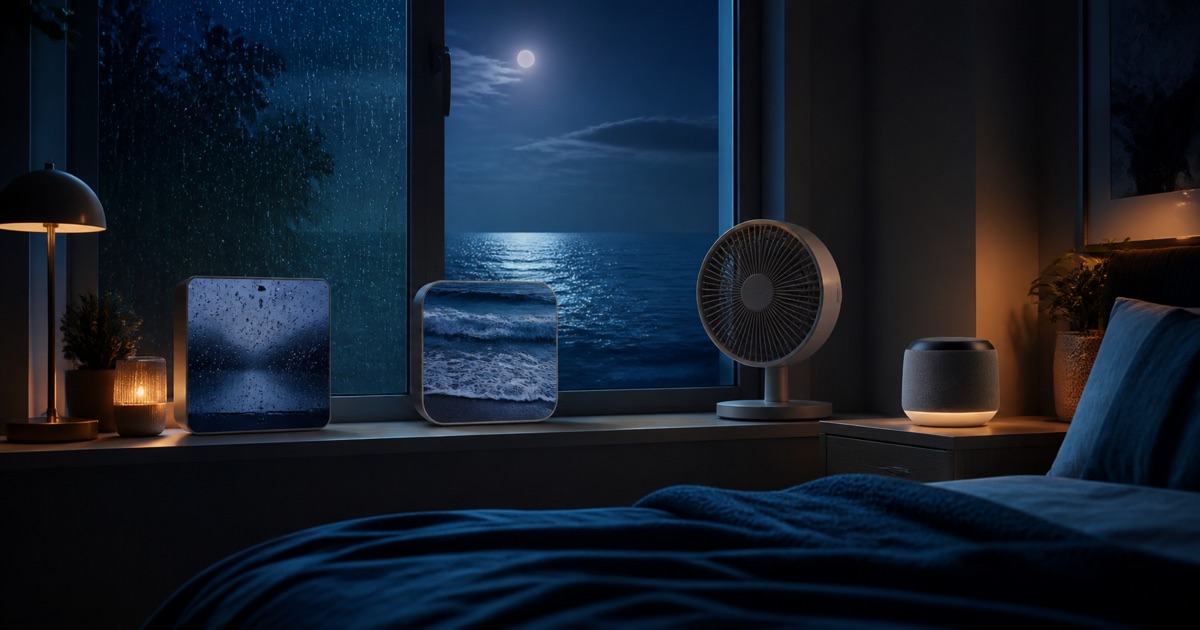
The word “best” invites a ranking: brown beats pink, rain beats white, one secret frequency beats them all. The evidence does not support that leaderboard.
A better question is: what job should the sound do in your bedroom? Once you answer that, the shortlist becomes manageable.
What qualities make a useful sleep sound?
A useful sleep sound is steady, low-information, comfortable, and quiet. It should not contain a story to follow, lyrics to anticipate, or sudden changes that pull attention back. Ideally, it becomes less noticeable after a few minutes.
If the job is masking, the sound also needs enough overlap with the disturbance. Bright white noise may soften sharper speech details. Pink noise or steady rain may feel gentler while covering a broad range. Brown noise or a low fan may blend better with rumble, though deep building vibration can be difficult to mask with audio alone.
Read the practical differences between white, pink, and brown noise before choosing by color.
Is any sound proven best?
No. Systematic reviews of continuous noise and auditory stimulation report mixed findings, varied methods, and low or very low-quality evidence. Some studies suggest benefit, others find no meaningful change, and some raise the possibility of disruption.
This uncertainty rules out promises, not personal experimentation. Your response can be real even when researchers have not identified a universal effect. Preference and room acoustics vary, and masking is more relevant in a noisy bedroom than in an already quiet one.
How can you choose in five nights?
Use a short audition rather than an endless catalog:
- Define the problem. Write down the sound you want to soften, or note that you simply dislike silence.
- Pick three candidates. A useful starting set is pink noise, gentle rain without thunder, and a steady fan.
- Preview while awake. Reject obvious loops, changing volume, voices, dramatic events, and anything irritating.
- Use one candidate each night. Set it at the lowest volume that does the job. Do not adjust it repeatedly once in bed.
- Repeat the best candidate, then compare with silence. A second night protects you from choosing based on luck.
Each morning, record estimated settling time, remembered awakenings, morning ear comfort, and how rested you feel. Keep the notes simple enough that you will actually do it.
What should you avoid?
Avoid using a loud track to overpower a structural noise problem. Start with the layered noisy-room setup and reserve sound for what remains. Avoid overnight earbuds when a speaker can do the job comfortably. Keep alarms and important signals audible.
Also avoid treating a sound like a performance. If you spend the night checking whether it is “working,” the track has become another task. Choose one quiet option, give it a fair comparison, and then stop optimizing. The best sound is often the one you no longer think about.