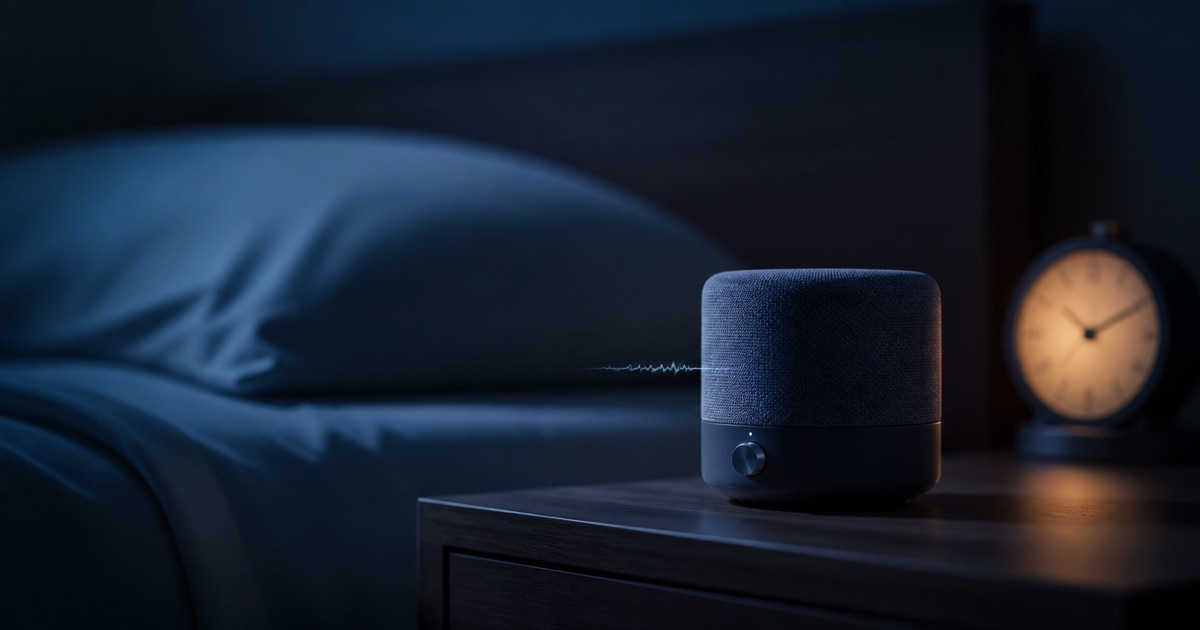
The useful setting is rarely the impressive one. If your track sounds immersive from the doorway, it is probably doing more than masking a refrigerator click or a little traffic.
Sleep listening lasts much longer than testing a song. Volume and duration both matter, so the sensible goal is a soft acoustic floor, not a wall of sound.
What is the lowest effective volume?
It is the first setting at which the disruptive sound loses its sharp edge. You may still hear the vehicle, footsteps, or conversation. The change is that it no longer leaps out of silence.
There is no universal phone-volume percentage that creates the same sound level in every bedroom. Speaker power, track mastering, distance, furnishings, and the original noise all change what reaches your ears.
WHO’s general safe-listening guidance says risk depends on loudness, duration, and frequency of exposure. It advises keeping personal devices below 60 percent of maximum and below an 80 dB average when monitoring is available. Those are broad upper-risk guidelines, not a target for an eight-hour bedroom track. A comfortable sleep sound should ordinarily be far quieter than conversation.
How do you set the volume tonight?
- Put the speaker away from your pillow. Start on a dresser or nightstand at some distance from your head.
- Place it toward the disturbance. If traffic comes through one window, positioning the speaker between the bed and window may mask more efficiently.
- Start at the lowest setting. Lie in your normal sleep position and let your ears settle for a minute.
- Raise it one step at a time. Stop as soon as the unwanted noise feels less abrupt.
- Check audibility. Make sure you can still hear alarms and any sound you genuinely need to notice.
- Recheck after ten minutes. A level that first seemed quiet may feel intrusive once the room settles.
If you need to keep raising the volume to overpower the room, combine sound with source control: close the window, add a door sweep, move the bed, or use suitable hearing protection. The nighttime noise-masking guide starts with those quieter fixes.
What are signs that it is too loud?
The obvious sign is that the sleep sound becomes the main event. You should not need to raise your voice to speak over it. You should also lower or stop it if it causes discomfort, if your ears ring, or if hearing seems muffled afterward. Persistent symptoms deserve professional hearing advice.
The continuous-noise evidence itself is low quality, and researchers have specifically noted possible risks to sleep and hearing at inappropriate levels. That supports a conservative rule: do not spend extra volume on a benefit that is not established.
For long listening windows, consider a timer instead of all-night playback. You can always extend it if the noise problem continues after the timer ends.